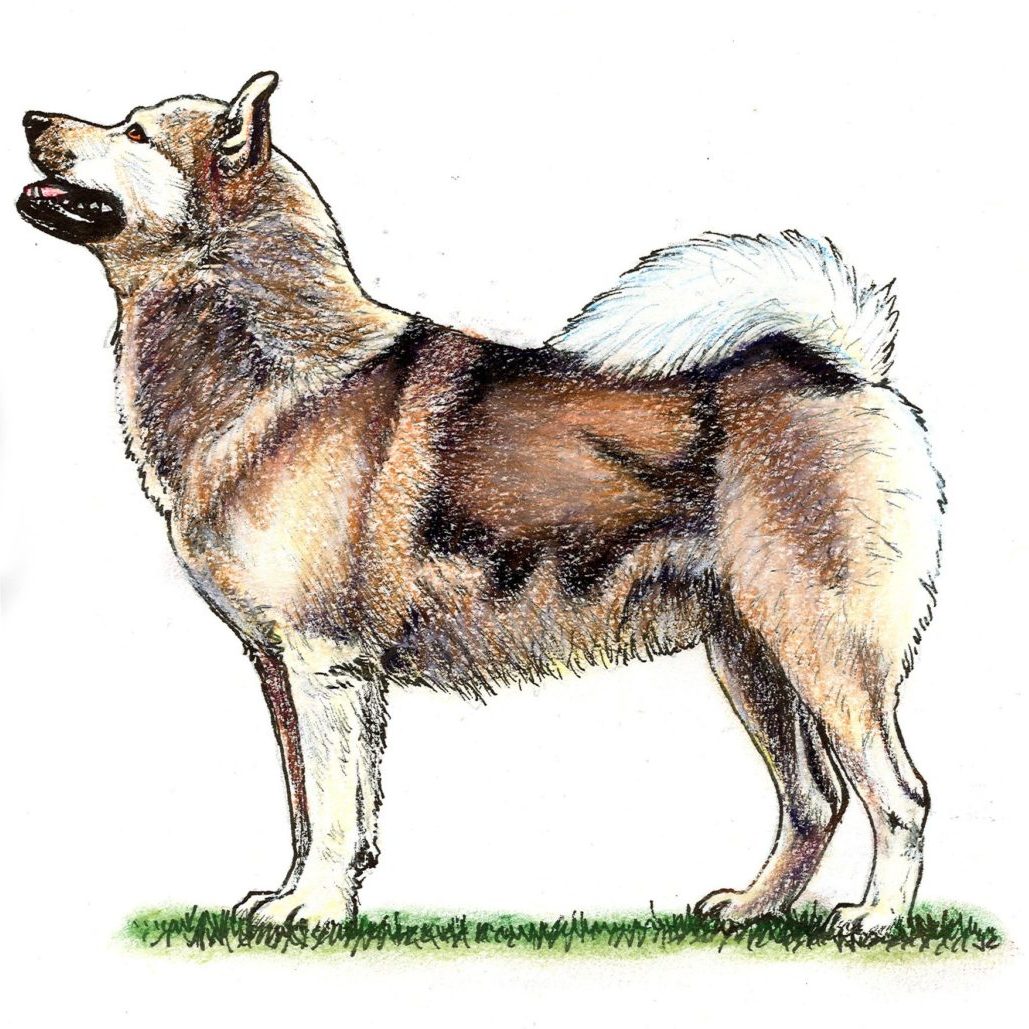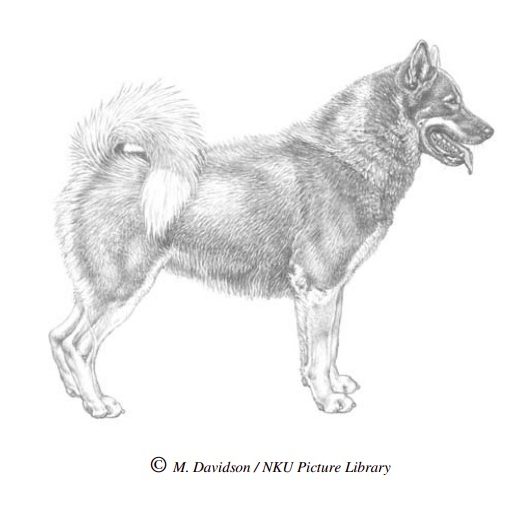
A brief, historic overview...
The Greenland Dog originates from the coastal area of the Arctic regions of Northern Siberia Alaska, Canada and Greenland and is one of the oldest breeds in the world. Remains have been found in the New Siberian Islands that have been carbon dated to around 9,000 years old. It is known that the dog first reached Greenland with the Sarqaq people around 4,000 to 5,000 years ago. The breed has been known in the past in the UK by a variety of names including Eskimo Dog, Husky, Inuit Dog, Esquimaux and settled on it’s current name Greenland Dog on 17th October 2000 to fall in line with the rest of Europe where it is known as the Gronlandhund. Unfortunately, due to the decline of dog-drawn transport, they have suffered a great fall in numbers since the turn of the last century. This trend has not been helped by the success of more domesticated and eye catching sled dog breeds such as the Alaskan Malamute, Siberian Husky and the Samoyed for racing, exploration, dog showing and as pets.
It is believed that the first Greenland Dogs were brought into the UK in around 1750, and they were first exhibited at one of the earliest dog shows at Darlington in 1875. The breed was recognised by the Kennel Club at it’s foundation in 1880.
Despite the increasing use of Alaskan Malamutes, Siberian Huskies and Samoyeds from the early 1900s, many explorers continued to use the Greenland Dog. In fact, the Antarctic surveyors and explorers appeared to favour the qualities of the Greenland Dog. Roald Amundsen recorded the earliest known data for Greenland Dogs being used as working dogs and it was his use of the dogs that is widely credited as giving him the edge over Scott in capturing the South Pole in his expedition of 1910-1912.
In 2025, the Greenland Dog was recognised by the Guiness Book of Records as the oldest recorded breed of dog; enthusiasts of the breed take great pride in ensuring the breed remains true to it's original type & function, focusing on ensuring our breed standards continue to reflect this and breeding dogs that fit these "blueprints" as best as possible.